



Ethiopia
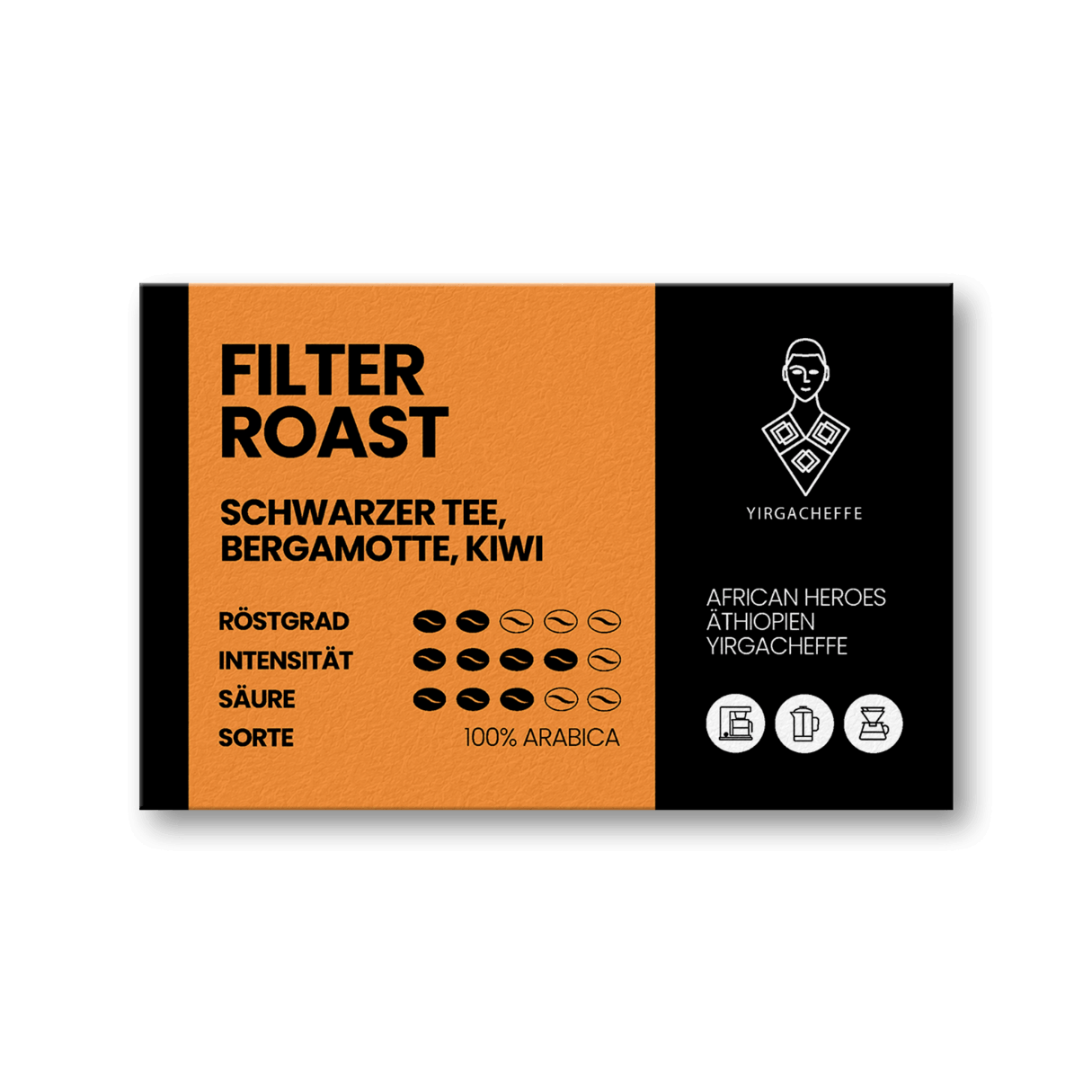
Ethiopia | Yirgacheffe | Doko Chere
Fruity. Floral. Truly clear.
Our Filter Doko Chere showcases the elegant side of Ethiopia. Fine notes of kiwi, black tea, and bergamot, accompanied by a lively acidity and a pleasant sweetness.
The light filter roast particularly highlights the complex aromas. A coffee for all who love fruity specialty coffees or want to discover the character of Ethiopian coffees. Ideal for pour-over, filter coffee machine, Chemex, or AeroPress.
- Size:
- 250g
- Grind size:
- Whole Bean
Kaffee Details
Herkunft
Warum ALRIGHTY?
Wir glauben an echte Veränderung – nicht an leere Siegel. Mit unserer Caretrade-Philosophie setzen wir auf faire Chancen, direkten Handel und Verantwortung vom Ursprung bis zur Tasse.
Unsere Bohnen stammen ausschließlich von den Underdogs der Kaffeewelt: jung, weiblich oder aus Afrika – Menschen, die oft übersehen werden, aber mehr als liefern.
Gemeinsam mit dem Jane Goodall Institut Deutschland fördern wir Projekte für Bildung, Umweltschutz und Empowerment in Afrika. Und fürs Klima? Jede ausgestoßene Tonne CO₂ wird durch Wiederaufforstung kompensiert – mit unserem Partner Menschen für Menschen.
Mehr Vielfalt. Mehr Imapct. Alles ALRGHTY!
Versand & Lieferung
- Deutschland: 4,90 € Versand, ab 49 € kostenlos.
- EU: 10,90 € Versand, ab 49 € nur 4,90 €.
- Klimaneutraler Versand mit DHL GoGreen.
- Lieferzeit: 2–3 Werktage (DE), 3–5 Werktage (EU).
- Bestellungen bis mittags gehen meist noch am selben Tag raus.
- Tracking inklusive.
Passt dazu
Beliebte Upgrades
Tipps zur Zubereitung
Unsere Filter-Röstungen entfalten ihr volles Aroma bei der klassischen Filterzubereitung. Wir empfehlen sie für die Filterkaffeemaschine, den Handfilter, die Chemex oder die French Press. Ideal für alle, die die feinen Aromen und die Herkunft des Kaffees besonders klar erleben möchten.
Filtermaschine
French Press
Handfilter (V60)
Über das Projekt
If you have any questions, you are always welcome to contact us. We'll get back to you as soon as possible, within 24 hours on weekdays.
-
Shipping Information
Use this text to answer questions in as much detail as possible for your customers.
-
Customer Support
Use this text to answer questions in as much detail as possible for your customers.
-
FAQ’s
Use this text to answer questions in as much detail as possible for your customers.
-
Contact Us
Use this text to answer questions in as much detail as possible for your customers.