


Ethiopia | Yirgacheffe | Doko Chere
Espresso
Fruity. Complex. Surprisingly different.
Our Espresso Doko Chere brings the best of Ethiopia to your cup. Intense notes of kiwi, black tea, and bergamot – combined with a pleasant sweetness and a full body.
The medium espresso roast creates an expressive espresso with vibrant aromatics and a long aftertaste. Those who enjoy fruity espressos or simply want to try something new will love this coffee. Perfect for portafilter machines, automatic coffee makers, and stovetop espresso makers.

Röstgrad
Information about the roast level.
Intensität
Information about the intensity.

Säure
Information about the acidity.
We believe in real change – not empty labels. With our Caretrade philosophy, we focus on fair opportunities, direct trade, and responsibility from origin to cup.
Our beans come exclusively from the underdogs of the coffee world: young, female, or from Africa – people who are often overlooked but deliver more than expected.
Together with Jane Goodall, we support projects for education, environmental protection, and empowerment in Africa. And for the climate? Every emitted ton of CO₂ is offset through reforestation – with our partner Menschen für Menschen.
More diversity. More impact. All ALRGHTY!
- Germany: €4.90 shipping, free for orders over €49.
- EU: €10.90 shipping, only €4.90 for orders over €49.
- Tip: Sign up for the newsletter and get free shipping on your first order!
- Climate-neutral shipping with DHL GoGreen.
- Delivery time: 2–3 business days (DE), 3–5 business days (EU).
- Orders placed by midday usually ship the same day.
- Tracking included.
Kaffeeprofil
Herkunft
Region
Produzent
Höhe
Varietät
Erntezeit
Verarbeitung
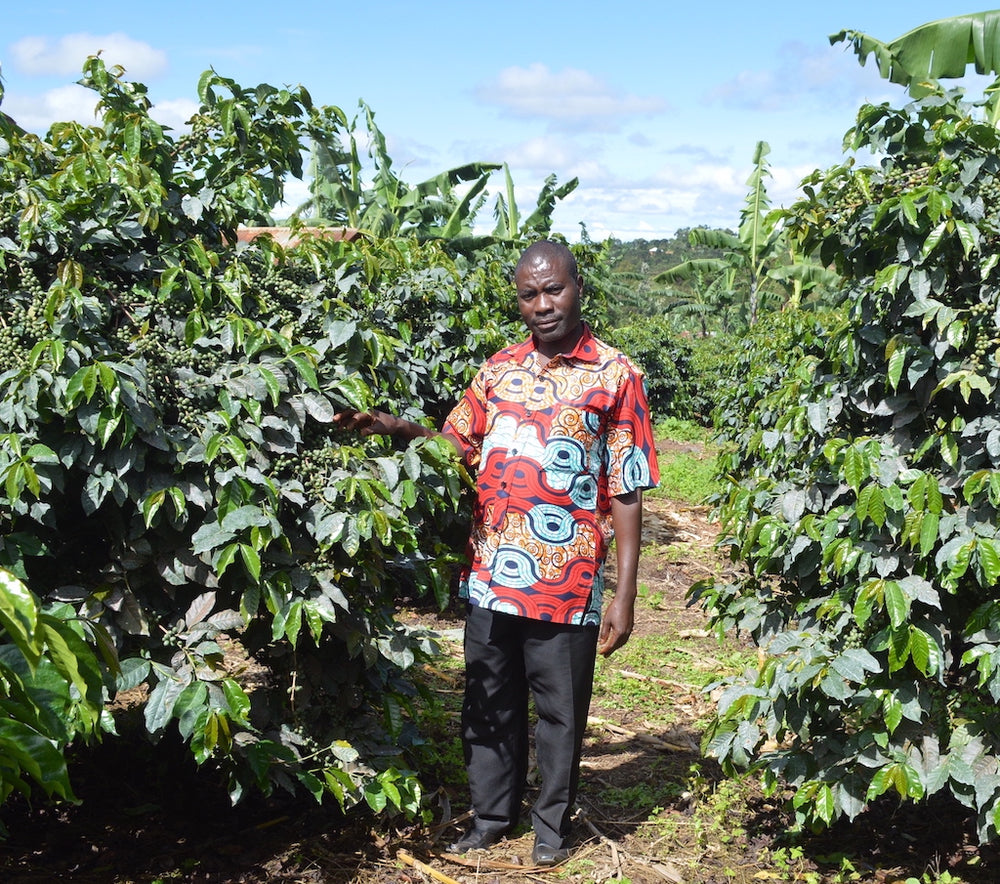
Ethiopia / Yirgacheffe / Doko Chere
Ethiopia is considered the cradle of coffee, as Coffea Arabica was discovered in the forests of the Kaffa region. Thus, it is not surprising that Ethiopia is today one of the most attractive coffee-growing countries with a wide variety of flavors.
This coffee was grown in Doko Chere, a kebele in the Galana Abaya district of the Yirgacheffe region. It was produced as part of the "Alliances for Action" program of the United Nations International Trade Centre and the "Farming Accelerator" project by List + Beisler.
Here, 1,800 smallholder farmers are trained in agricultural practices and in understanding farming as a family business. The farmers meet for training, learning best practices in agriculture such as composting, pruning, rejuvenation, and intercropping. Another important topic is the development of adaptation strategies to changing climatic conditions. In Ethiopia, coffee cultivation is often a family business, so gender equality and the empowerment of women are particularly emphasized in the curricula. Overall, the Farming Accelerator project aims to increase farmers' crop productivity through sustainable practices and thus ultimately improve their livelihoods.
Tipps zur Zubereitung
The roasting of the Yirgacheffe I Ethiopia is optimized for all espresso preparation methods. We recommend it for use in portafilter machines and fully automatic coffee makers. Ideal as espresso, Americano, cappuccino, flat white, and latte macchiato.


Serious Business?
ALRIGHTY.
Du hast ein Unternehmen und möchtest unseren Kaffee ausschenken oder verkaufen? Wir haben das Richtige für dich. Gastro Packungen oder Kaffee im Mehrweg-Eimer, wir finden das passende Portfolio für dich.

Ethiopia / Yirgacheffe / Doko Chere
Ethiopia is considered the cradle of coffee, as Coffea Arabica was discovered in the forests of the Kaffa region. Thus, it is not surprising that Ethiopia is today one of the most attractive coffee-growing countries with a wide variety of flavors.
This coffee was grown in Doko Chere, a kebele in the Galana Abaya district of the Yirgacheffe region. It was produced as part of the "Alliances for Action" program of the United Nations International Trade Centre and the "Farming Accelerator" project by List + Beisler.
Here, 1,800 smallholder farmers are trained in agricultural practices and in understanding farming as a family business. The farmers meet for training, learning best practices in agriculture such as composting, pruning, rejuvenation, and intercropping. Another important topic is the development of adaptation strategies to changing climatic conditions. In Ethiopia, coffee cultivation is often a family business, so gender equality and the empowerment of women are particularly emphasized in the curricula. Overall, the Farming Accelerator project aims to increase farmers' crop productivity through sustainable practices and thus ultimately improve their livelihoods.